Place in the System
Install it after the control source and before the separate downstream branches. Each output can then continue to the compatible devices assigned to that branch.

DMX
Distributes incoming DMX data to two output branches within a lighting system.
Device Information
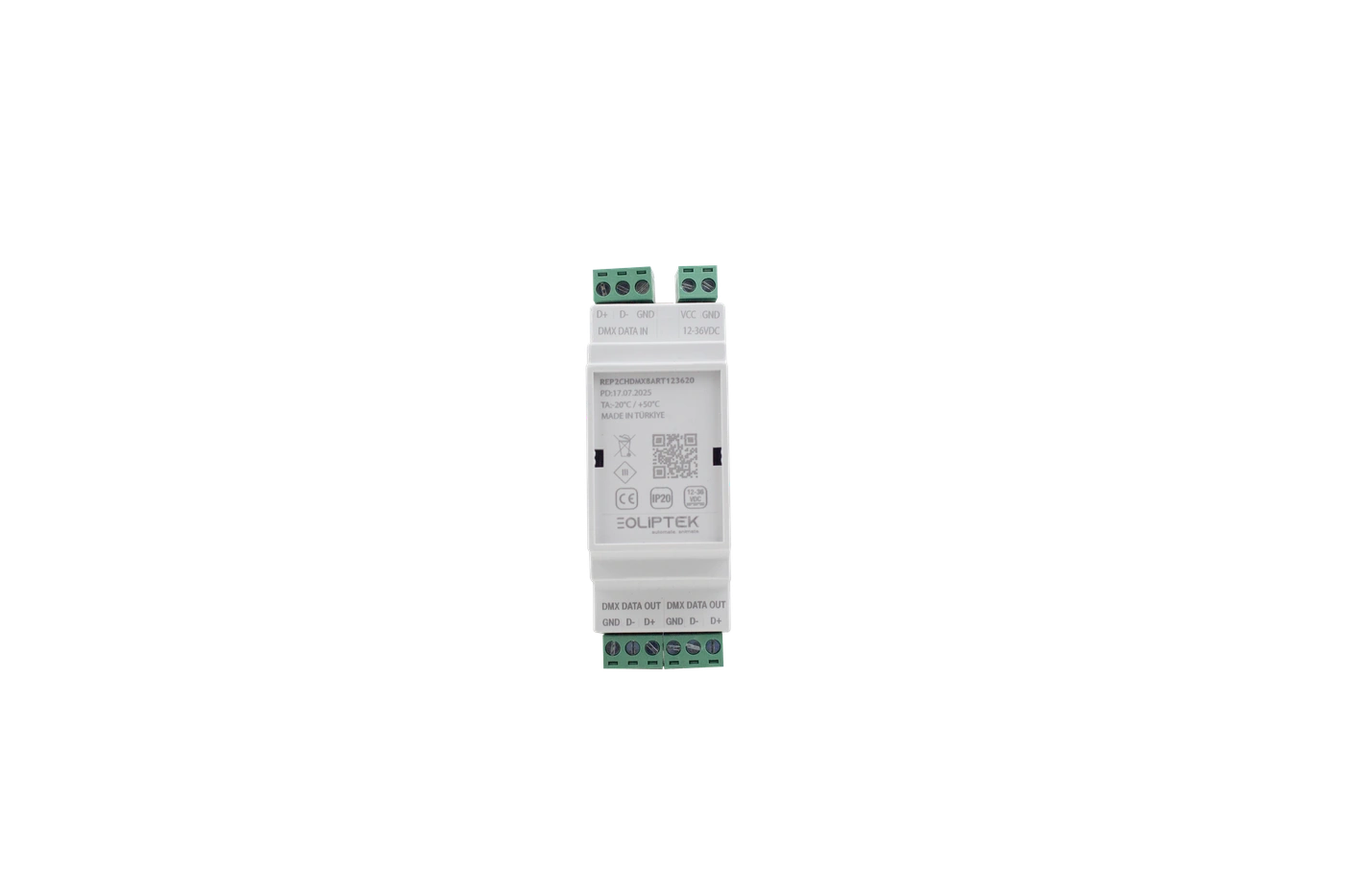
2CH DMX Repeater receives one DMX control signal and distributes it to two separate output branches. It is used when one control path needs to serve more than one practical lighting run.
Install it after the control source and before the separate downstream branches. Each output can then continue to the compatible devices assigned to that branch.
The matching official device is a one-input, two-output DMX repeater with isolated outputs, helping keep branches separated within the signal path.
Document each downstream branch, keep the addressing plan available during commissioning and verify termination and routing requirements for the complete installation.
OLIDMX Knowledge Notes
Questions about the device role and verified information for 2CH DMX Repeater.
2CH DMX Repeater receives one DMX control signal and distributes it to two separate output branches. It is used when one control path needs to serve more than one practical lighting run. Learn more about DMX signal distribution.
Install it after the control source and before the separate downstream branches. Each output can then continue to the compatible devices assigned to that branch.
The Confirmed Details section lists information verified for this device or its official series. Use the contact page when you need a current datasheet or information that is still being verified.